Head into Deeper Gulf Stream Waters
Offshore fishing charters in Key West targeting pelagic species in open blue water.
Offshore fishing in Key West means running miles beyond the reef line into Gulf Stream currents where mahi-mahi, tuna, wahoo, and sailfish move through during their seasonal migrations. The water turns a deeper blue, the temperature breaks become visible on the fishfinder, and the crew starts trolling lures or rigging live bait to cover water quickly. You spend the first part of your trip getting to the fishing grounds, then work areas where weed lines, bird activity, and current edges concentrate baitfish and predators.
Reef Runner Charters runs offshore trips for anglers who want high-energy, big-game fishing. The crew adjusts trolling speed, lure selection, and depths throughout the day based on what the water shows and what species are moving that week. Full-day trips give you more time to work multiple zones and increase your chances of hooking into larger fish that feed farther from shore.
If you want to fish deeper water and target species that do not show up closer to shore, reach out to book an offshore charter in Key West.
Our Services
What Offshore Fishing Involves Once You Leave the Dock
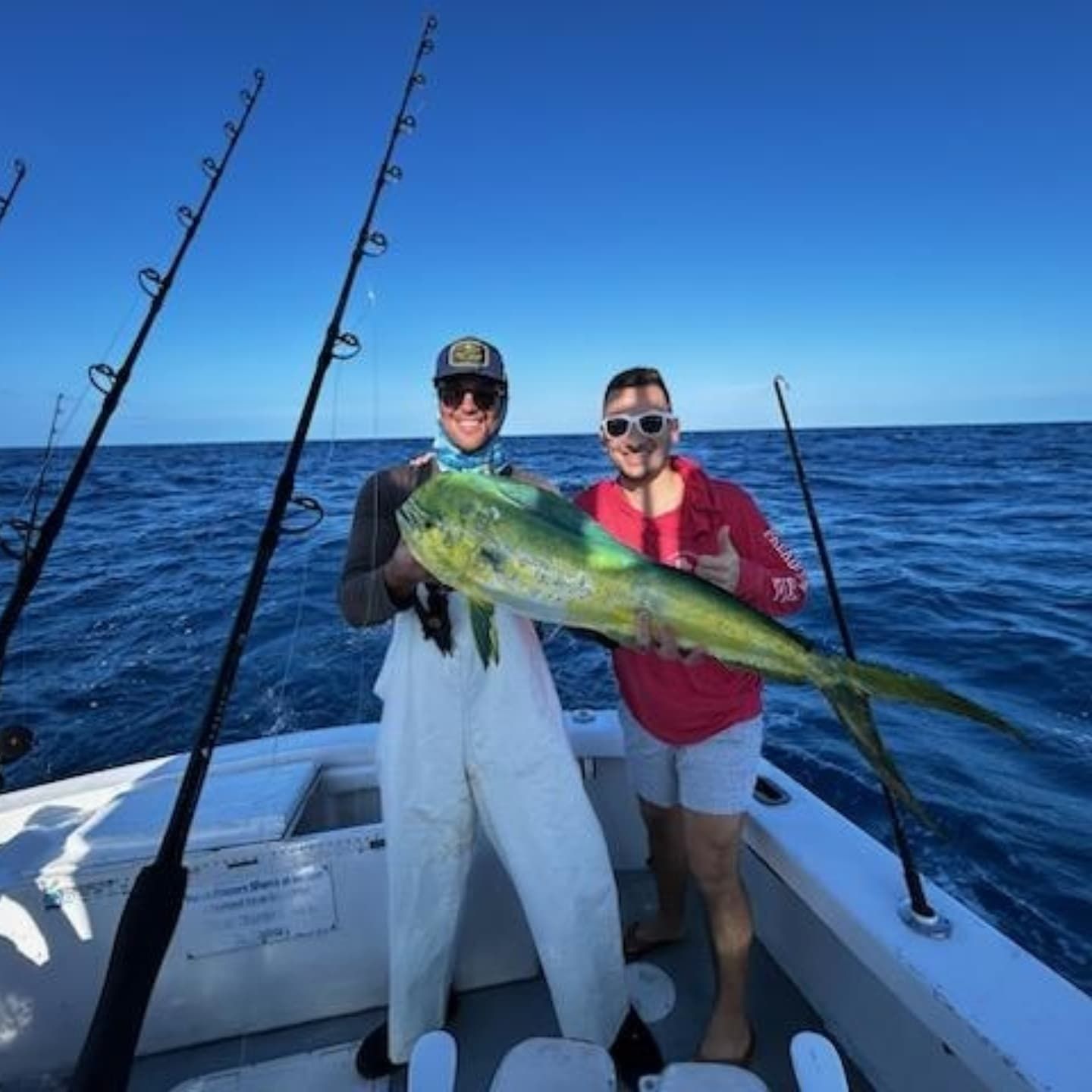
Your captain runs the boat out past the reef line and into Gulf Stream waters off Key West, watching for temperature changes and floating weed patches that hold baitfish. The crew sets trolling lines at different depths and speeds, adjusting based on what the sonar shows and whether fish are feeding on the surface or deeper in the water column. You stay ready to grab a rod when a fish strikes, and the crew coaches you through the fight if it is your first time reeling in a pelagic species.
After your trip, you leave with photos of the catch, cleaned fillets if you keep fish, and a better sense of how offshore fishing works in open water. The crew explains why they chose certain routes, what made one area more productive than another, and how seasonal patterns shape where fish show up.
Offshore charters require longer travel times and expose you to rougher seas, especially when wind builds during the afternoon. The payoff is access to larger, faster species that fight harder and pull more line. The crew monitors weather closely and adjusts the plan if conditions become unsafe, but offshore trips generally work best during calmer months and early-morning departures when the Gulf Stream stays fishable.
Common Questions Before Heading Offshore
Most people booking an offshore charter want to know how rough the ride gets, what they should bring, and how long it takes to reach the fishing grounds. These details help you prepare for the differences between offshore and inshore trips.
Reef Runner Charters runs offshore trips throughout the year in Key West, with trip timing and routes adjusted for weather, sea state, and seasonal fish movement. If you want to book a deep-water trip or talk through what to expect, contact the crew to confirm availability and discuss your options.